
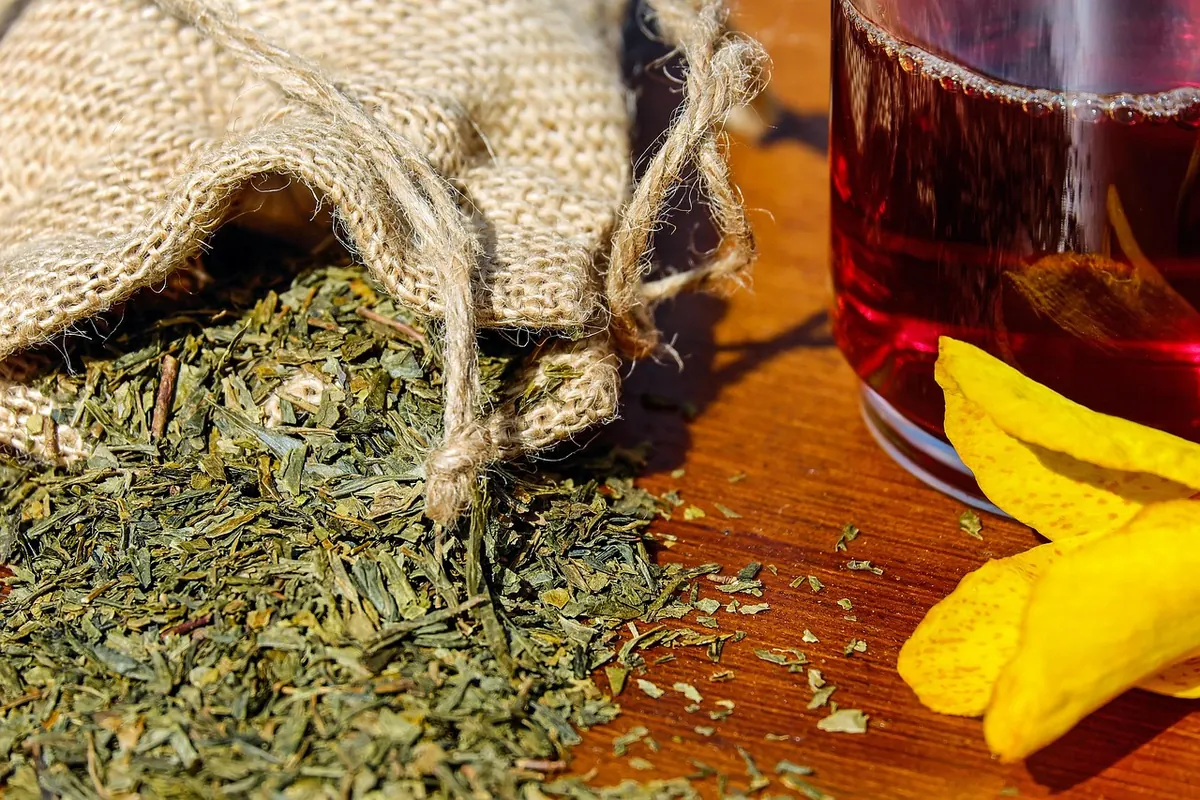
Herbal tisanes are forgiving in ways that true teas are not. There is no delicate oxidation to spoil, no astringent tannin clock ticking quite so loudly. But forgiving is not the same as foolproof. Pour a hard boil over a spoonful of chamomile and you get a cup that smells like a hayloft and tastes faintly of dust. Simmer the same blossoms gently, keep them covered, and strain at four minutes, and you get something honeyed and soft.
Most disappointing cups of herbal tea are not the herb's fault. They come down to method, and the same five errors show up again and again. None of them require new equipment to fix. Two of them take about ten seconds.
Mistake 1: Boiling Water for Everything
A rolling boil is the right move for ginger, cinnamon bark, fennel seed, licorice root, rosehip, and hibiscus. Those are dense, dry, structurally stubborn ingredients, and they need heat and time to give up what they have.
That same water will flatten a delicate flower. Chamomile, lemon balm, linden, rose petals, tulsi, and most fresh-leaf mint carry their character in volatile aromatic oils, and near-boiling water drives those oils off in steam before they ever reach your cup. What's left behind is a flatter, harsher brew, often described as bitter or "green-tasting" when the real problem was temperature.
Delicate flowers and soft leaves want roughly 175–195°F (80–90°C). Roots, bark, seeds, and dried berries want 200–212°F (95–100°C).
No thermometer? You do not need one. Boil the kettle, then let it sit for two to four minutes before pouring over tender herbs. Pouring boiling water into a cool mug or a room-temperature teapot drops the temperature several degrees on its own, which is often enough. If you want a faster fix, drop a single ice cube into the mug before the water goes in.
Mistake 2: Steeping Until the Flavor Fades
Aromatics extract early; bitterness extracts late. Every extra minute past the sweet spot trades brightness for a dull, medicinal edge. Spearmint left in for fifteen minutes stops tasting like spearmint and starts tasting like toothpaste.
As a working range: three to five minutes for flowers and soft leaves, five to seven for mint and most leafy blends, five to eight for hibiscus and rosehip, and seven to ten for roots, seeds, and bark. Tough roots often do better simmered gently on the stove for ten to fifteen minutes than steeped in a mug.
Two habits make the timing easier to hit. Set an actual timer, and taste at the early end of the range rather than the late end — you can always give it another minute, but you cannot take one back. Then cover the cup while it steeps. The compounds you are trying to capture are aromatic, and an open mug lets them drift off with the steam.
More time is never a substitute for more leaf. If the cup tastes thin at four minutes, add herb next time instead of minutes.
Mistake 3: Guessing at the Leaf
Under-leafing produces hot water with a memory of mint. Over-leafing produces something thick, chalky, and unpleasant, and it wastes good herb. Cups swing wildly from day to day because the scoop swings wildly too.
A few practical benchmarks, per 8 ounces (about 240 ml) of water:
- Leafy herbs — chamomile, peppermint, lemon balm, tulsi: 1 to 2 teaspoons.
- Dense roots, seeds, and berries — ginger, fennel, rosehip, licorice: ½ to 1 teaspoon.
- Fine-cut or powdered herbs — use less, since they release fast.
- Whole dried leaves and flowers — use slightly more, and expect a slower extraction.
If you want real consistency, weigh your herb for a week. Two to three grams per cup is a reasonable starting point for most leafy tisanes. A small kitchen scale will calibrate your eye faster than any chart, and after a week you can go back to spoons with far better instincts. Keep the spoon level, not heaped.
Mistake 4: Blending a Crowd Into One Cup
Build in three parts, not seven
Five herbs at one teaspoon each rarely tastes like five herbs. It tastes like mud, because nothing leads. A blend that works usually has a base making up roughly two-thirds of the mix, a supporting herb at about a third, and one accent measured in pinches.
Take a calming evening blend: lemon balm as the base, chamomile as support, a pinch of fennel seed or rose petal as the accent. That is a blend with a point of view. Swap the accent and you have a genuinely different cup rather than a slightly different mud.
Respect the brewing gap
If your blend pairs ginger root with lemon balm, they do not want the same treatment. Simmer the ginger for ten minutes, then pour that hot liquid over the lemon balm and steep four. Or skip the conflict: blend ingredients with similar cuts and similar needs, and save the mismatched pairs for separate brews. A few herbs — licorice root, cloves, valerian — are potent enough that a pinch goes a long way; treat them like seasoning, not filler.
Write your ratios down the first time a blend works. Memory is a poor recipe keeper.
Mistake 5: Sweetening Before You've Tasted
Sweetener does more than add sweetness. It blunts bitterness and astringency, which means a generous spoonful of honey can disguise an over-steeped or scorched cup — and you will keep making that cup because it tastes fine.
Taste first, unsweetened, at the three-minute mark. If the cup needs help, try a squeeze of lemon with hibiscus or rosehip, or the barest pinch of salt, which softens perceived bitterness without making anything taste salty. If you reach for honey, stir it in once the tea has cooled enough to sip comfortably; adding it to scalding water cooks off some of the delicate aroma you paid for.
Sweeten the cup you actually brewed, not the cup you meant to brew.
Honey should not be given to infants under twelve months. And if you are pregnant, nursing, or taking prescription medication, check with a qualified healthcare professional before making any herb a daily habit — some, including licorice root, deserve real caution.
A Simple Reset for Tomorrow's Cup
Pick one tisane you already own. Check whether it is delicate or tough and set your water temperature accordingly. Measure the leaf instead of eyeballing it. Set a timer for the short end of the range, cover the mug, and taste before you sweeten. Then adjust exactly one variable next time — temperature, time, or quantity — and see what changes.
That single-cup experiment, repeated three or four times, teaches more than any chart. Herbal tisanes reward attention more than precision, and attention is free.
Photo: Couleur / Pixabay