
Oolong lives in the wide middle of the tea world, between green and black, and that middle is enormous. A barely roasted Taiwanese oolong can taste like lilac and fresh cream; a heavily roasted Wuyi rock tea drinks like dark caramel with a mineral edge. For a newcomer, that range is the hard part — the first bag you buy feels like a coin flip. Roast level is the easiest way in. It hints at how the tea will smell, how forgiving it is to brew, and how much sweetness sits under the toast. Below are seven oolongs worth starting with, ordered from lightest roast to darkest, with the flavors to expect and the brewing details that keep a cup from turning bitter.
A Quick Roast-Level Cheat Sheet
Roasting is a finishing step, done after the leaves are oxidized and shaped. It drives off moisture and creates toasted, nutty, caramel-like notes. Oxidation and roast are separate dials: a tea can be lightly oxidized and heavily roasted, or the reverse. Most beginners confuse the two, so read the dry leaf before you brew.
- Unroasted to barely roasted: green, floral, buttery. Delicate and easy to over-steep.
- Light to medium roast: toasted grain, honey, roasted chestnut, soft fruit.
- Medium to heavy roast: cocoa, dark caramel, charcoal, dried fruit, mineral depth.
Your nose is the reliable test. Open the bag: if it smells like a flower garden, you are at the light end. If it smells like toast or chocolate, you are at the dark end.
1 and 2: The Lightest End — Bao Zhong and Jade Oolong
Bao Zhong (Pouchong)
This is the gentlest introduction on the list. Bao Zhong is lightly oxidized and barely roasted, with long, twisty leaves and a pale gold liquor. Expect lilac, gardenia, steamed greens, and a soft, creamy finish. It is the oolong most likely to win over a green tea drinker, and the one most likely to go bitter if you lose track of time.
Brew it cooler than you think: about 85°C (185°F), with a short first steep of 30 seconds. It is lovely in a plain glass so you can watch the leaves open.
Jade Oolong and Green-Style Tieguanyin
Taiwanese jade oolongs and the modern "green" style of Anxi Tieguanyin sit at the same level. They are rolled into tight beads, smell distinctly of orchid, and taste clean and slightly vegetal with a sweet, lingering aftertaste. Because the leaves are tightly rolled, they need a little longer to wake up — a quick rinse with hot water helps. A 15-second rinse you pour away is standard practice, not a waste.
3 and 4: The Middle Ground — Dong Ding and Milk Oolong
Dong Ding
Dong Ding comes from Lugu in central Taiwan and is the classic "toasted but still floral" oolong. Traditional versions are medium roasted, giving you roasted chestnut, caramel, and a honeyed finish over the same orchid base. Many modern versions are roasted lightly, so check the description. If you want one tea that shows you what roast actually does to flavor, buy a light and a traditional Dong Ding from the same seller and taste them side by side.
Milk Oolong (Jin Xuan)
Jin Xuan is a cultivar, and good milk oolong has a naturally creamy texture with butter and sugarcane notes on top of a light roast. Be aware that some milk oolongs on the market are flavored rather than natural. Ask the vendor directly; a reputable shop will tell you, and the natural version is worth the search.
5: Medium Roast — Traditional Tieguanyin
This is not the bright green Tieguanyin most people meet first. Traditional Tieguanyin is roasted longer, sometimes repeatedly over weeks, until the leaf turns dark and the liquor is amber. The flavor moves from orchid to roasted grain, honey, and dried apricot, with a roundness that holds up to milk and to food. It is also one of the most forgiving oolongs to brew, which makes it a smart choice if your timing is still sloppy. Caffeine-sensitive drinkers should note that oolong contains caffeine; if that matters for you, keep cups earlier in the day and check with a doctor about your own limits.
6 and 7: The Dark End — Wuyi Rock Oolong and Charcoal-Roasted Oolong
Wuyi Rock Oolong (Da Hong Pao, Rou Gui, Shui Xian)
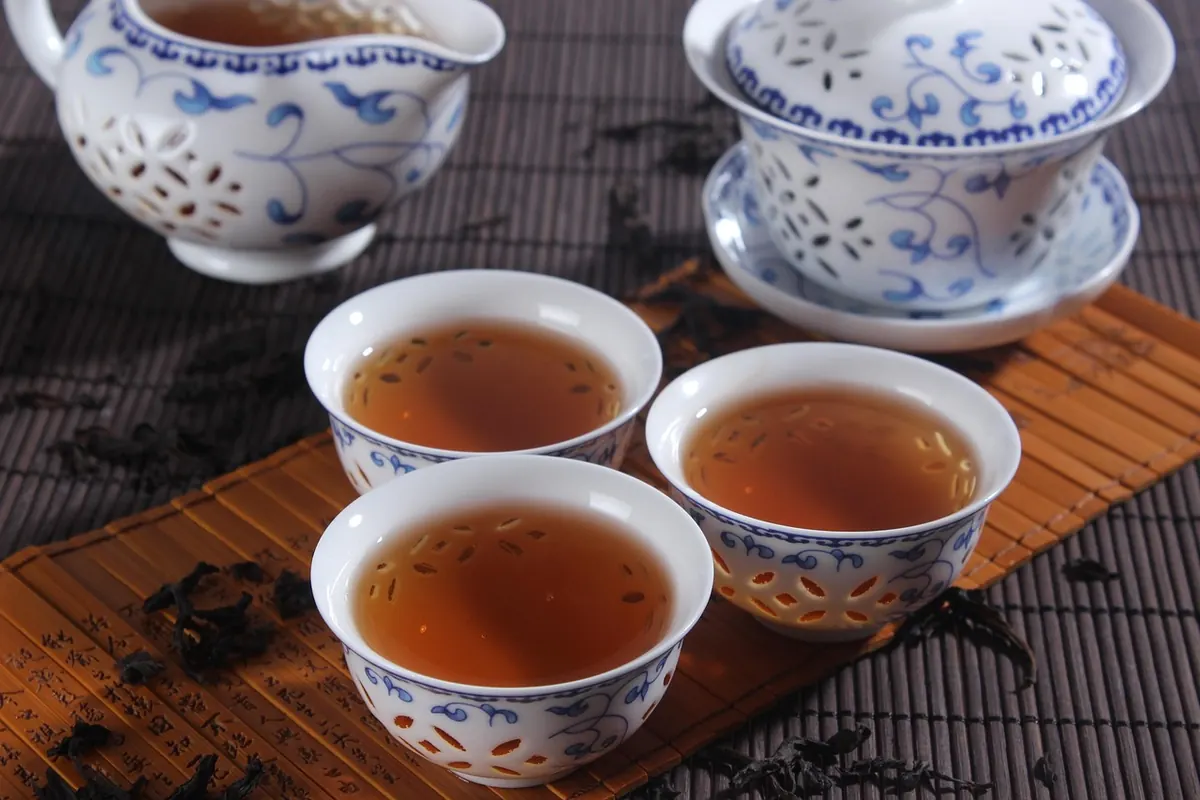
Grown in the rocky cliffs of Fujian, these teas are roasted over charcoal, often several times with rest periods in between. Da Hong Pao is the famous name, but Rou Gui and Shui Xian are usually better value and just as instructive. Look for cocoa, dark caramel, stone fruit, and the mineral, slightly cooling sensation that drinkers call "rock taste." These teas want boiling water — 95°C to 100°C (203°F to 212°F) — and they keep giving through many steeps.
Charcoal-Roasted and Aged Oolong
At the very darkest end sit heavily roasted oolongs, including those aged for years after roasting. The cup is deep brown, low in aroma but rich in taste: espresso, dark chocolate, dried longan, a whisper of smoke. It is a good winter tea and an easy one to brew badly, because the roast masks small mistakes. Both styles store well; keep them airtight and away from light and strong smells.
Brewing Tips That Work Across the Roast Scale
- Start with more leaf than you would for black tea. About 5 grams per 150 ml of water, or a heaped teaspoon of rolled leaf in a small gaiwan.
- Rinse once. Hot water in, out within ten seconds. This wakes the leaf and warms your vessel.
- Keep steeps short and repeat. Begin at 20 to 30 seconds, then add five to ten seconds each round. Most of these teas give five or more good infusions.
- Drop the temperature for light roasts. Around 85°C for Bao Zhong and jade oolongs, 90°C for Dong Ding and milk oolong, near boiling for the dark roasts.
- Use filtered water. Heavily mineral water flattens floral oolongs and makes roasted ones taste muddy.
- Drink light roasts sooner. Their delicate aromatics fade within months. Dark roasts hold their character far longer.
If you prefer a mug to a gaiwan, use roughly one tablespoon of leaf per 250 ml, steep for two to three minutes, and re-steep the same leaves once or twice before composting them.
Choosing Your First Bag
Pick two teas from different ends of the scale rather than three from the same level — a Bao Zhong and a Rou Gui, for example. Tasting them in the same week teaches you more about roast than any description can. Buy small amounts from a shop that lists the cultivar, origin, and roast level, and ask when the tea was harvested. Then keep notes: the temperature you used, the steep time, and whether you liked it. Three or four tasting sessions in, you will know whether your taste runs floral or toasty, and every bag after that gets easier to choose.
Photo: sadjack / Pixabay