
A full Japanese tea ceremony can run four hours and take years to learn. A tasting at home can run ninety minutes and still feel unhurried, attentive, and genuinely lovely. What matters is not a flawless performance. It is that you clear a space, make one bowl of matcha well, and give your guests a reason to sit still. This guide trims the ritual to its essentials so you can host a small group without a tearoom, a teacher, or a stiff atmosphere.
Set the Room Before You Set the Table
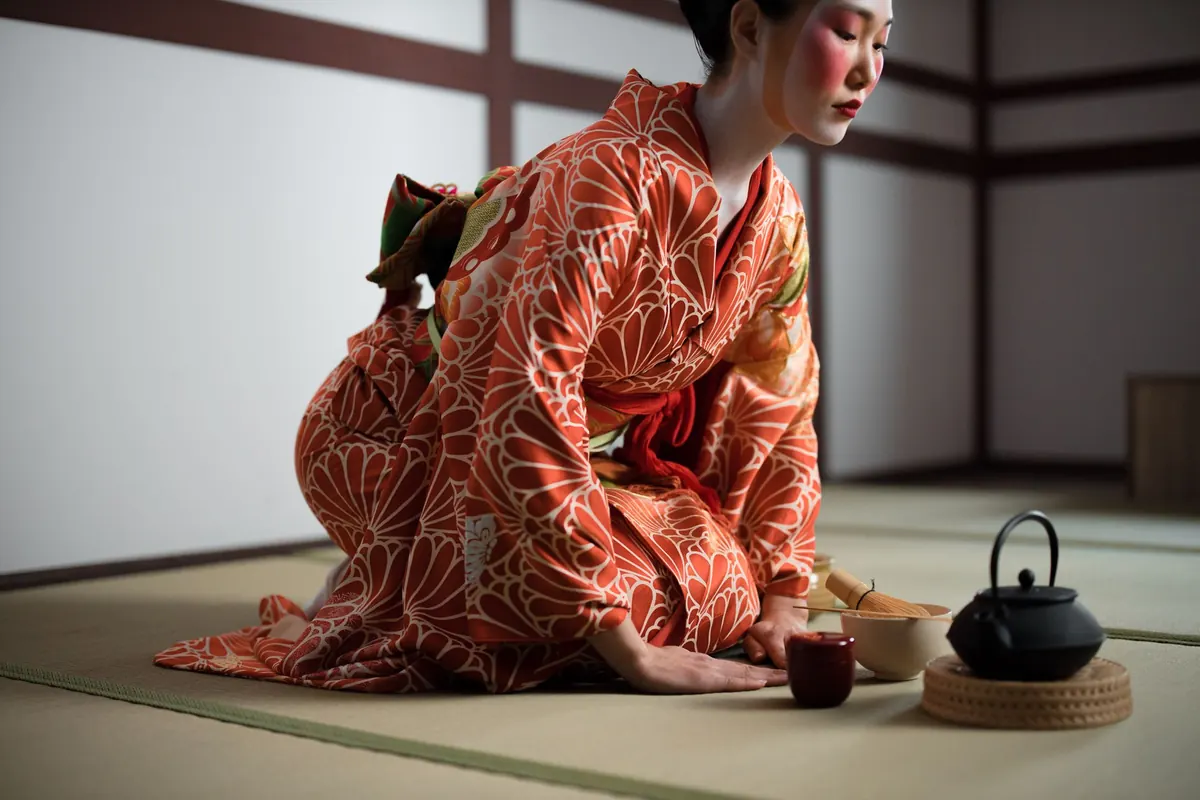
Choose the smallest room in your home that seats everyone comfortably, then empty it more than feels necessary. In a traditional tearoom the space is measured in tatami mats, and a room of four and a half mats is a deliberate exercise in restraint. You are borrowing the principle, not the architecture: few objects, blank walls, one thing worth looking at.
Light should fall from the side, not directly overhead. Switch off the ceiling fixture and use a lamp or a window. Put phones in a basket by the door, yours included. A little silence is the most underrated piece of equipment you own.
Seating and the one seasonal touch
Guests can sit on floor cushions at a low table, or on ordinary chairs around an ordinary table. Kneeling is not the test. If you use a low table, keep the session short and tell people up front that they may shift, stretch, or lean back whenever they like. Keep a stool or chair nearby for anyone who needs it.
Add one seasonal gesture: a single camellia bloom in a shallow bowl, a bare twig with berries in winter, a few stems of autumn grass. One item. Two is a display, three is clutter.
The Equipment That Matters, and What Can Wait
You can host a credible tasting with six things. Everything else is optional.
- Chawan (tea bowl): wide and deep enough to whisk in, with a rim you can drink from. Any ceramic bowl with those proportions works.
- Chasen (bamboo whisk): aim for eighty prongs or more. A whisk with too few tines makes thin foam.
- Chashaku (bamboo scoop): or a small measuring spoon. Two level scoops is roughly one serving.
- Matcha: ceremonial grade, bright green, and sifted through a fine strainer to break up clumps.
- Kettle: plus a cup or pitcher for cooling the water down.
- A rinsing bowl and a clean cloth: for warming and drying bowls between guests.
Skip the tea caddy, the ladle, the brazier, and the silk pouch for now. Buy a good bowl and whisk; improvise the rest.
What Your Guests Actually Need to Know
Send the invitation with the practical details: how long it will run, that shoes come off, that loose clothing is easier than anything tight, and that strong perfume will fight the tea. People relax when they know the rules in advance.
Then teach the four moves that carry most of the etiquette:
- Wait to be invited before sitting, and bow slightly when you enter.
- Pick up the bowl with both hands, rest it on your left palm, and steady it with your right. Look at it for a moment before drinking.
- Turn the bowl two quarter-turns clockwise, drink in two or three sips, then turn it back the way it came.
- Wipe the rim with your fingers, and thank your host with a small bow when you finish.
Tell them the sweet is eaten first, and that nobody needs to kneel, finish quickly, or say anything clever. A host who prepares each bowl individually and passes it with both hands, front of the bowl facing the guest, has already done the hard part. Matcha contains caffeine, so if someone is pregnant or sensitive to it, pour them a smaller bowl or offer roasted hojicha instead; anyone with a health condition should check with their doctor.
Whisking Matcha Without the Panic
Warm the bowl. Pour in hot water, whisk for a few seconds, tip it out, and dry the inside. A cold bowl cools the tea before it reaches the foam stage.
Measure and sift. Two level scoops of matcha, about half a teaspoon, sifted into the dry bowl. Lumps will float and taste chalky no matter how hard you whisk.
Cool the water. Around 80°C, roughly 70 to 80 ml per bowl. Boiling water scalds matcha, turns it bitter, and prevents a stable foam. Let the kettle sit, or pour the water between two cups to bring the temperature down.
Whisk fast, and keep the tines off the bottom. Hold the chasen with your thumb and index finger near the top, then move your wrist quickly in a zigzag W or M shape rather than a circle. Fifteen to twenty seconds should give you a fine, dense foam with bubbles too small to see individually. Finish by lifting the whisk slowly from the centre to collapse the larger bubbles.
If no foam forms, your water was too cool or your matcha is old. Big soapy bubbles mean you were whisking in circles or too slowly. Bitter taste usually means the water was too hot or you used too much powder.
Seasonal Sweets, and Why They Come First
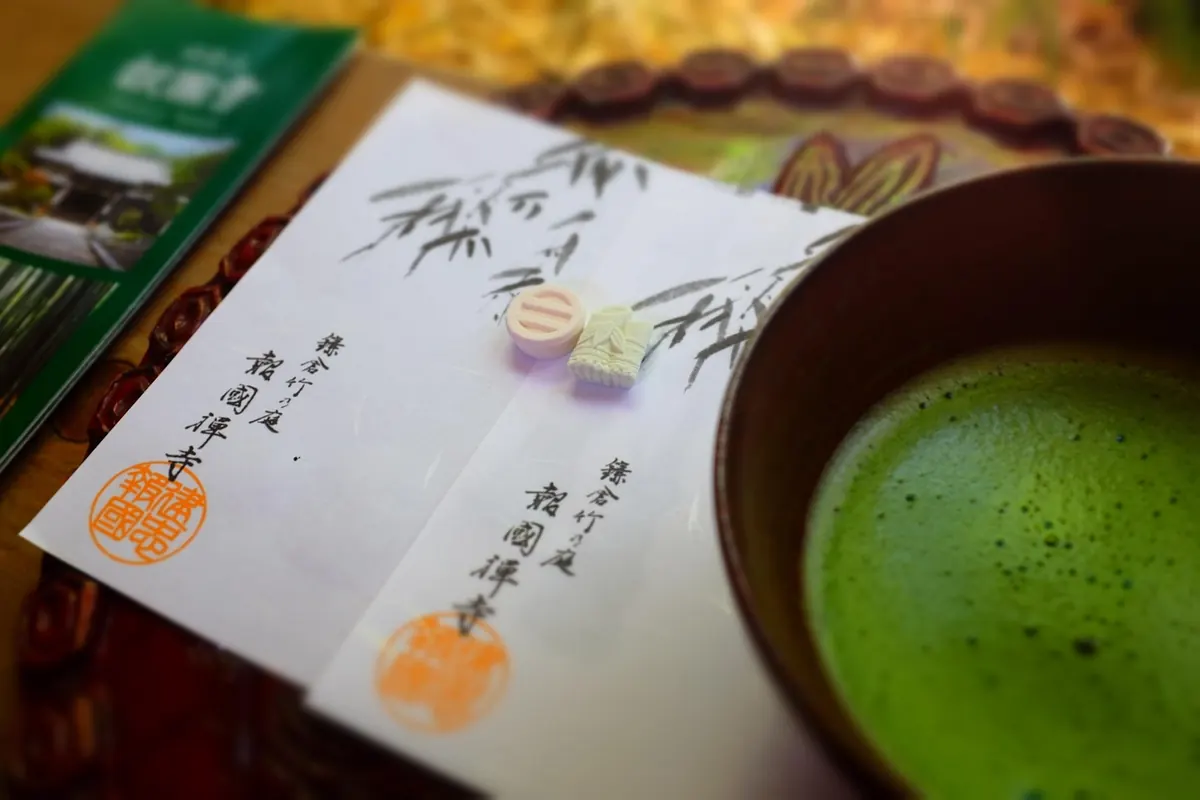
The sweet arrives before the tea, and that order is not decoration. Sugar on the tongue makes the matcha's bitterness read as savoury rather than harsh. Keep portions to one or two bites, serve them on a small square of paper, and set out a wooden pick so nobody has to handle sticky things with their fingers.
- Spring: sakura mochi, or a pale pink wagashi shaped like a plum blossom.
- Summer: chilled kuzu kiri or warabi mochi, cool and translucent.
- Autumn: chestnut yokan, or a sweet pressed into a maple leaf.
- Winter: dense yokan or dry higashi, dark and restrained.
Japanese groceries and wagashi shops carry these, often frozen. If you cannot find them, a small piece of good dark chocolate, a dried apricot, or a single date does the job without pretending to be something it isn't.
A Ninety-Minute Flow
- Twenty minutes before: set out bowls, whisk, sweets, paper, and picks. Fill the kettle. Wipe the table.
- Arrival: greet guests at the door, take their coats, let them settle and look around.
- Sweets, ten minutes: pass the sweets, eat together, keep the talk easy.
- One bowl each, forty minutes: make the guest of honour's bowl first. Guests watch you whisk; that is part of the experience, not dead time.
- Second round, fifteen minutes: offer a thinner, cooler tea, or a second bowl to anyone who wants one.
- Close: thank everyone, clear quietly, and let the conversation wind down on its own before anyone reaches for their shoes.
Keep the First One Small
Invite three people, not eight, and serve one sweet, one bowl each, and nothing else. Do not attempt a full meal. If something goes wrong, and it will, pour the tea out, wipe the bowl, and start again. Nobody is grading you.
Repeat it once a month and the details become yours: a bowl you like, a whisk you trust, a sweet you look forward to in November. The ceremony's real subject was never the tea. It is attention, given freely for an hour. If your guests leave a little quieter than they arrived, you did it right.
Photo: cottonbro studio / Pexels