
A gaiwan on a Tuesday morning sounds like a contradiction. Gongfu brewing means a high ratio of leaf to water, short infusions, and a series of small pours — and the ceremonial furniture that usually comes with it can eat ten minutes you do not have. The brewing itself, though, is quick. Once you know the order of operations, it is faster than a drip machine.
The routine below runs roughly five minutes from kettle to first sip, and it still gives you four or five good infusions from the same leaves. Nothing here is a compromise on flavor. What you are cutting is the ceremony: the tray, the pitcher, the arrangement of cups, the sitting still.
What You Actually Need
A full gongfu setup is lovely on a Sunday. On a Wednesday it is mostly clutter. For this version, four things do the work:
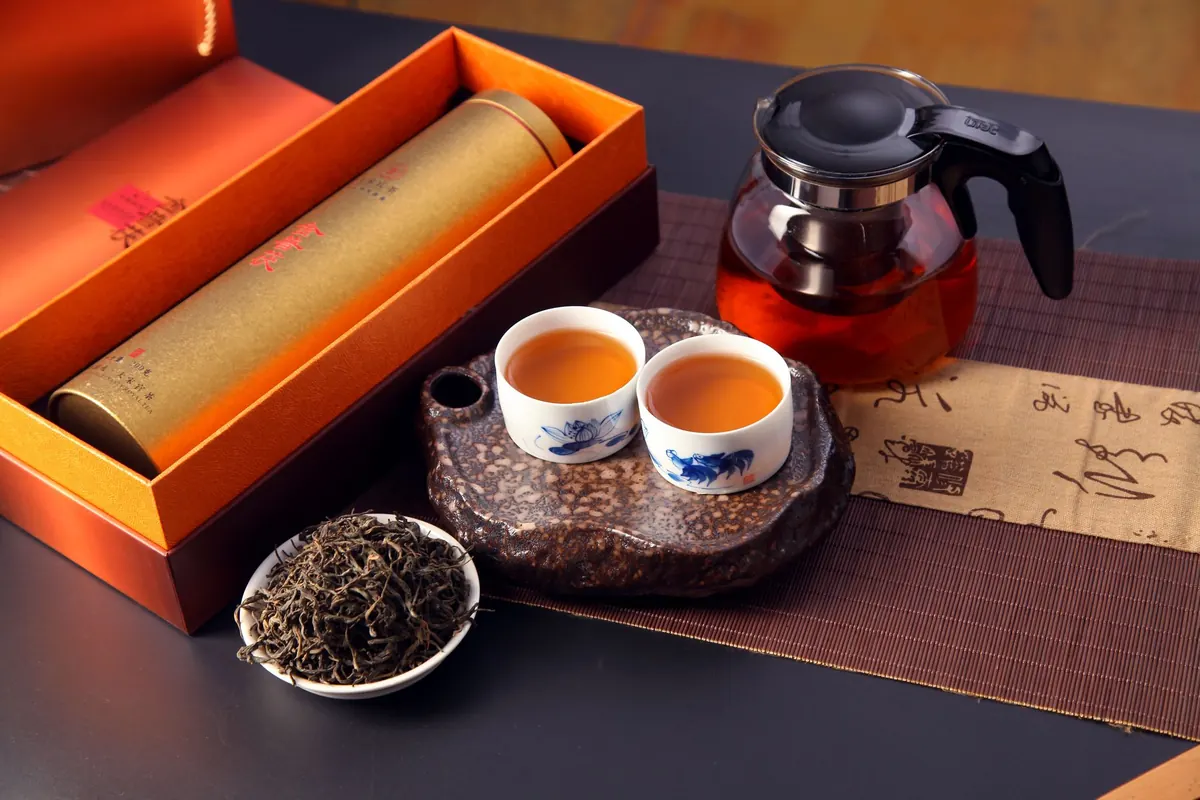
- A small brewing vessel. A 100–150 ml gaiwan or a small teapot, about the size of a coffee cup. Smaller means the water cools to drinking temperature quickly, which is why you can sip immediately instead of waiting.
- Leaf. Any tea you like. Rolled oolongs and black teas are the most forgiving at this hour, because they re-steep well and do not turn bitter if you are half awake.
- A mug. Tall enough for 200 ml or so. This is your drinking cup, your fairness pitcher, and your cooling vessel all at once.
- Hot water. A temperature-controlled kettle is convenient. If yours just boils, pour from a height into a mug first, then into the gaiwan — that drops the temperature several degrees and takes about five seconds.
Optional, but worth having on the counter: a small plate or saucer to catch drips, and a tea towel. That is the whole kit. No tray needed, no scoop-and-strain routine, no rinsing cups one at a time.
The Five-Minute Sequence
The trick is that the next infusion brews while you drink the last one. Everything overlaps.
- Minute 0 — Kettle on, leaf in. Start the water. While it heats, put 4–5 grams of tea into the gaiwan. No scale? A heaped tablespoon of rolled oolong, or a slightly rounded one of loose black leaf, is close enough for a 120 ml vessel.
- Minutes 1–2 — Warm the mug, rinse if needed. Water hits temperature. Pour a splash into your mug to warm it, swirl, and tip it out. For ripe pu'er, aged teas, or tightly rolled oolongs, add a quick rinse over the leaf: pour, count to three, dump. Skip the rinse for green, white, and most black teas.
- Minute 2 — First infusion. Fill the gaiwan, wait ten to fifteen seconds, then pour everything into your mug. Do not leave water sitting on the leaves between pours; that is what makes a first cup bitter.
- Minutes 2–4 — Sip while the second brews. Drink from the mug while you fill the gaiwan again for infusion two. A 120 ml pour lands in the mug at a comfortable temperature within a minute.
- Minutes 4–5 — Repeat, adding time. Each infusion gets five to ten seconds longer than the one before. By the fourth, you are at thirty or forty seconds and still moving quickly.
That is the whole method. If you get three infusions before you leave the kitchen and the fourth happens at your desk with a thermos of hot water, nothing has gone wrong.
Dialing In the Numbers
These are starting points, not laws. Adjust one variable at a time so you know what changed the cup:
- Green and white tea: 75–85°C, about 3 g per 100 ml, first infusion 10–20 seconds.
- Oolong: 90–95°C, 5 g per 100 ml, first infusion 10–20 seconds.
- Black tea: 90–95°C, 4–5 g per 100 ml, first infusion 10–15 seconds.
- Ripe pu'er and aged teas: 95–100°C, 5–7 g per 100 ml, first infusion 5–10 seconds after a rinse.
If the cup tastes harsh or drying, the next infusion should be shorter — five seconds, not fifteen. Bitterness in the first pour does not ruin the session; the leaves have more to give. If the tea tastes thin and watery, add leaf rather than time, and give it a little more heat.
One adjustment worth making every morning
Taste the tea before you commit to a full mug. Take a small sip from the first pour and decide whether the second infusion needs more or less time. It costs three seconds and it is the difference between a routine and a recipe.
Shortcuts That Do Not Cost Flavor
- Weigh leaf the night before. Portion it into the gaiwan and leave the lid on. Morning-you just adds water.
- Hold your kettle temperature. A thermos of water at 90°C keeps every infusion consistent without reheating.
- Skip the pitcher. Pour straight into the mug you will drink from. The only reason to use a fairness pitcher is when you are serving several people.
- Brew grandpa style as a fallback. Leaves in a mug, top up with hot water as you drink, no straining. It is a different drink, but a good one, and it takes zero minutes of attention.
- Leave the lid ajar between infusions for green and white teas, so the leaves do not steam and turn dull.
When It Goes Wrong
It is bitter. Water was too hot, or the leaves sat in it too long. Shorten the next pour to five seconds and drink it anyway — the second infusion often tastes better than the first.
It is weak and pale. More leaf, or hotter water. Do not simply extend the steeping time on a tea you already know is thin; you will pull out astringency without much flavor.
The spout clogs. Do not fill the gaiwan past two-thirds. The lid needs room to push the leaf back as you pour, and the pour should be steady rather than fast.
You are running late. Pour one strong infusion into a travel mug, leave the leaves in the gaiwan, and re-steep when you get home. Wet leaves keep for several hours; a session does not have to finish in one sitting.
Make It a Habit
Pick one tea for the week and brew it the same way every morning. Same vessel, same leaf, same rough timing. By Friday the movements are automatic and your sense of what the tea needs has sharpened, which is the entire point of gongfu brewing — attention, not equipment.
Keep the gaiwan next to the kettle, not in a cupboard. Fill the kettle the night before. Then Monday morning, when you have five minutes and one hand free, the whole thing happens without a decision. That is a real tea practice, and it fits between the alarm and the door.
Photo: 荼兰 DSGC / Pexels